Introduction
Aw we wrap up our course, we return to a place where we started: cosmology. If God is the “maker of heaven and earth,” and creation’s final cause, we can we say about the “end” of creation? Christian theology and practice is apocalyptic and eschatological: something has been revealed in the present that evidences and embodies the final end of creation. Our life together as Christians resides in a “now” as well as a “not yet.” This can become dark, world-denying, and even nihilistic, but these paths are not the best reflection of the Biblical witness or of the Christian tradition. Our hope, finally, is for creation renewed. Our life is a participation in the missio Dei, the work of renewal that begins now even while it awaits the return of Christ, the Logos of the universe.
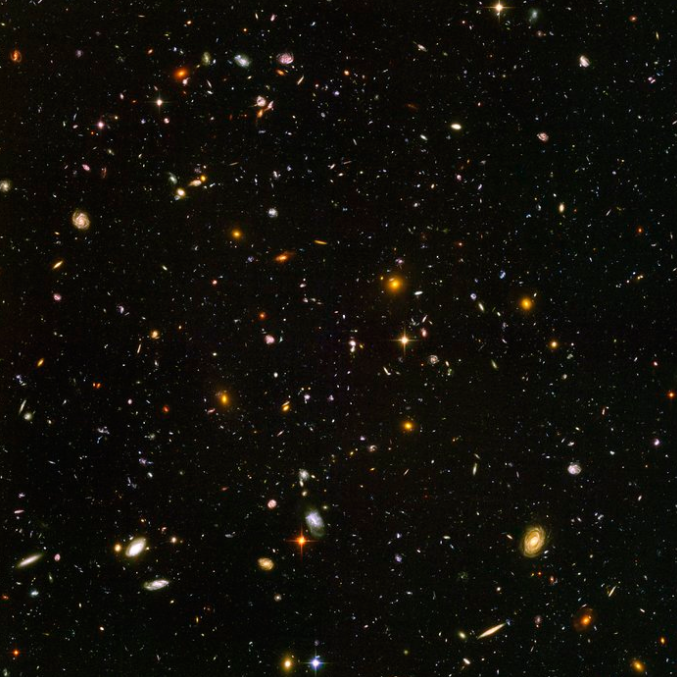
Reflection on the cosmic scope of redemption leads us to ask again about the Medieval “great chain of being” and the vast scale of the universe. We humans are created “a little lower than the angels,” and yet in terms of cosmic history we are not even a speck. Look at a single galaxy in a telescope and and you view the light from a hundred billion starts, which has traveled millions or billions of light years. Consider then that this is but one of about two hundred billion galaxies in the universe. What other life might exist beyond earth? If there is other life in the universe, how might it relate to our theologies of creation and redemption? What does the Christian hope of a renewed creation really mean? These are questions we’ll consider in this final Unit.
Reading
Laudato Si’, ¶¶216-245